
The Gatekeeper: The Leader Who Became the Speed Limit
Updated: Oct 2

Not just the big calls — everything. The pricing exception, the new hire, the wording of the client email, the vendor pick, the seating chart. It all routed through one person, and that person was proud of it. "I have high standards," he'd say. "I care about the details." And he did. The quality of what came out of his team was excellent, consistently, for years.
His reputation was built on it. Leadership trusted his function completely, because they knew he personally touched everything. Nothing sloppy ever got out. If you wanted it done right, it went through him.
Here's what it cost — and it's the kind of cost that hides behind good results for a long time.
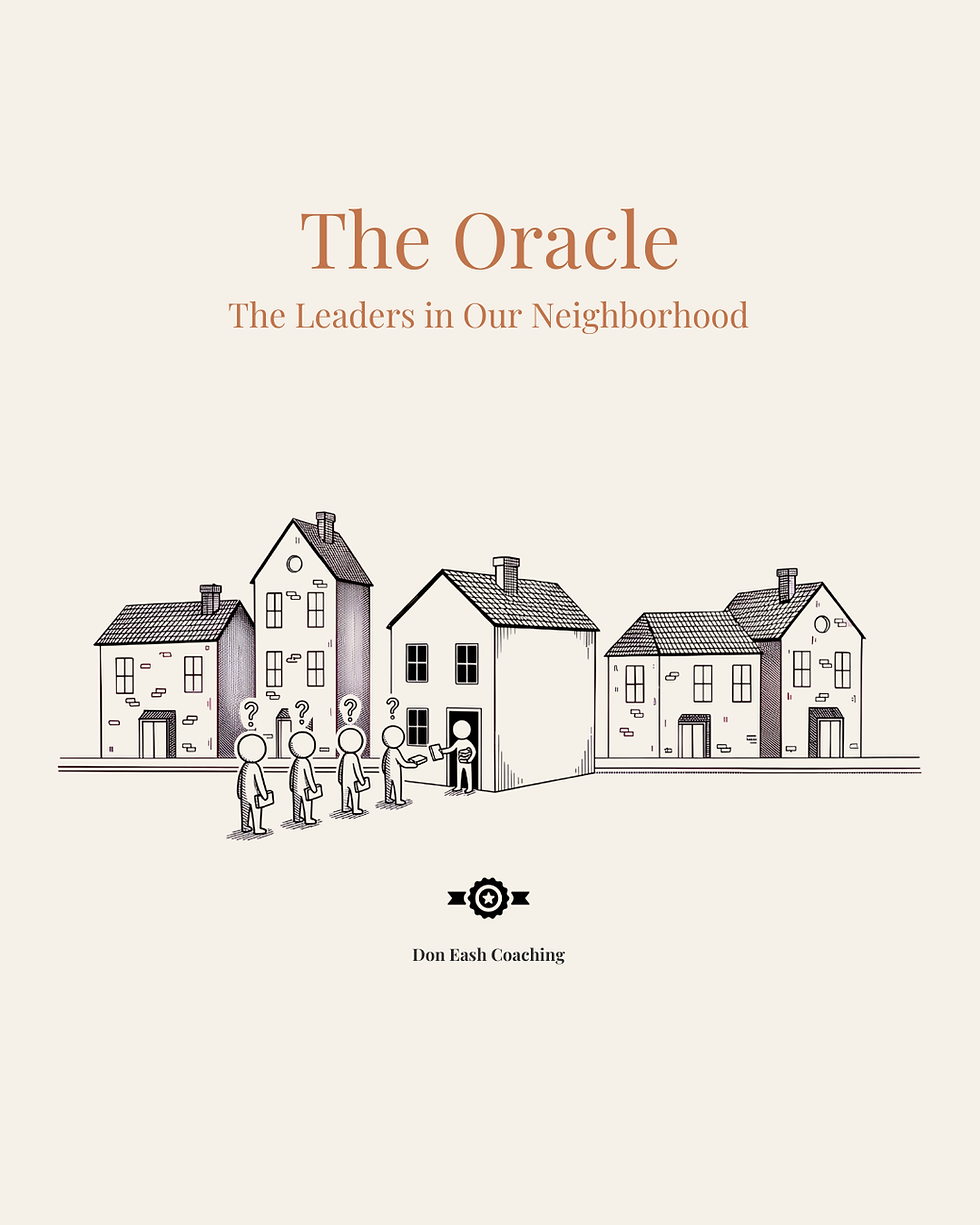
His team couldn't move without him. Every decision, big or small, waited in a line outside his door — some days, literally. And because everything waited on him, nothing moved faster than he could personally process it. He had quietly become the speed limit for the entire organization.
And it got worse in a way he didn't see. His best people stopped bringing him their own judgment, because their judgment didn't matter — his was the only one that counted. So they stopped developing it. Why sweat a hard call when you know it'll get re-decided at his desk anyway? He'd hired sharp people and slowly trained them to be order-takers. And then he complained that he had to make every decision himself, never noticing he'd built exactly that.
He hadn't taken a real vacation in three years. When he was out, everything stopped and waited for him to get back. He read that as proof of how essential he was. It was actually proof of how fragile he'd made everything.
I said to him: "Your team produces excellent work. And I don't think you have a standards problem — I think you've made yourself the only point of judgment in a system that has fifteen capable people in it. You're not the quality bar. You're the bottleneck with a great reputation."
He pushed back, hard. "If I stop checking, quality drops. I've seen it. The one time I let something through without reviewing it, it had a mistake in it. This is what caring looks like."
I said: "Maybe. Or maybe quality dips for a quarter while people build the judgment you've spent years not letting them use — and then it's better than you alone could ever make it, because now it's fifteen people catching things instead of one exhausted person catching everything. You're not protecting quality. You're protecting the feeling of being the one it all depends on."
That's the pattern, and it's one of the most respectable-looking failures in the neighborhood, because it wears the costume of rigor and care. But underneath, for a lot of Gatekeepers, the control is doing something quieter — it's certainty. As long as it goes through me, I know it's right, and I never have to sit with the discomfort of trusting someone else and being wrong. So they call it standards. And they mistake a bottleneck for a backbone.
Then he tried something that felt, to him, like negligence. He took his own decisions and sorted them into three piles: the ones only he could truly make, the ones someone on his team could make with a quick check-in, and the ones he was reviewing purely out of habit.
The first pile was tiny. The third was enormous. Then he did one hard thing — he picked ten recurring decisions from that third pile and handed them over completely. Not "run it by me," but "this is yours now. You decide. You own it."
The first month was uncomfortable. A couple of calls got made differently than he would have made them — and the work was fine. One was arguably better than his version. And slowly, the line outside his door got shorter, his team got faster, and the people he'd been treating as order-takers started acting like the leaders he'd actually hired.
Here's the part he wrestled with: it cost him something real. Being the one everything depends on had felt like importance. Learning to be the person who builds judgment in others, instead of the person who is the judgment — that felt, at first, like becoming less necessary. He had to learn that the less necessary he was to every small decision, the more valuable he became to the ones that actually mattered.
Here's one thing to try. This week, take three decisions you routinely review — three things that currently wait for your sign-off — and hand one of them over completely. Not "check with me first." Fully theirs. Then notice the urge to peek, and don't. The goal isn't to care less. It's to stop being the reason nothing moves.
And here's the question worth sitting with: if you were out for a month, would your team slow down a little — or would it stop and wait at your door? And if it would stop, is that a sign of how essential you are, or how much you've kept for yourself?


Comments